

The construction industry is undergoing a profound transformation.
Today, architects, developers, and manufacturers are searching for materials capable of reducing the environmental impact of every project.
In this context, biopaints made with biomass-derived resins are emerging as one of the most promising innovations for lowering the carbon footprint of buildings and interior spaces.
These paints partially or completely replace traditional petrochemical resins with components obtained from plant waste, natural oils, and renewable biomass.
The result is a more sustainable solution with less dependence on fossil fuels and improved environmental performance.


What Are Biopaints?
Biopaints are coatings formulated with raw materials of natural or renewable origin.
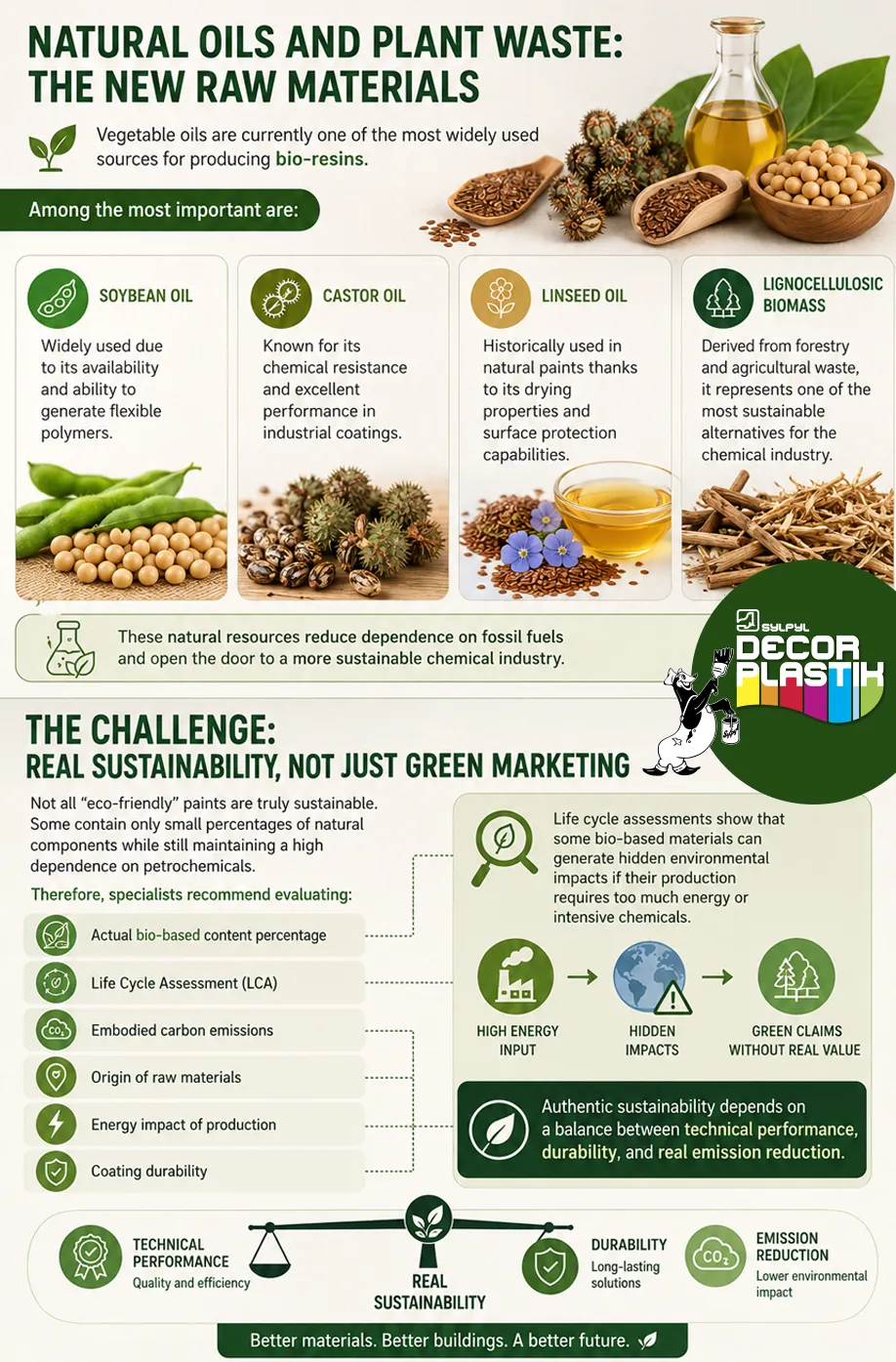
Unlike conventional paints, which use petroleum-derived resins, biopaints incorporate materials sourced from:
- Linseed oil
- Castor oil
- Soybean oil
- Lignocellulosic biomass
- Agricultural waste
- Plant fibers
- Biodegradable natural derivatives
These so-called “bio-resins” or “green resins” make it possible to manufacture paints with lower environmental impact and a reduced carbon footprint compared to traditional petrochemical systems.
The Problem with Petroleum-Derived Resins
For decades, the paint and coatings industry relied almost exclusively on petrochemical polymers.
Although these materials offer resistance and durability, they also generate significant environmental consequences:
- High CO₂ emissions during production
- Dependence on non-renewable fossil resources
- Release of volatile organic compounds (VOCs)
- Greater environmental impact throughout the building lifecycle
- Recycling and disposal difficulties
The production of synthetic resins involves energy-intensive industrial processes and pollutant emissions.
As a result, the search for renewable alternatives has become a priority in sustainable construction.


Biomass-Derived Resins: The Real Ecological Transition
Biomass-derived resins represent a structural shift in the coatings industry. Instead of using petroleum as a raw material, these solutions utilize organic waste and renewable resources.
Current technologies can transform plant waste and natural oils into functional polymers capable of delivering properties comparable to conventional resins.
This approach promotes the circular economy because it:
- Reuses agricultural or industrial waste
- Reduces fossil fuel extraction
- Lowers carbon emissions
- Encourages renewable materials
- Extends the lifecycle of natural resources
In addition, many bio-based systems can temporarily store biogenic carbon within the material itself, contributing to building decarbonization strategies.

Carbon Footprint in Construction Projects
Sustainability in construction is no longer limited to energy savings during building operation. Today, there is a strong focus on embodied carbon, meaning the emissions generated from material manufacturing through installation.
Paints and coatings are part of that equation.
Although they may seem like minor elements, finishes have a significant impact due to:
- Intensive chemical processes
- Material transportation
- Frequent renovations
- Emissions during application
- Replacements over time
Several studies on bio-based materials show that biomass-derived solutions can significantly reduce greenhouse gas emissions compared to conventional materials.

Benefits of Sustainable Biopaints
1. Reduced CO₂ Emissions
The main benefit is the reduction of the carbon footprint associated with petrochemical resin manufacturing.
By using renewable biomass, emissions linked to oil extraction and refining are considerably reduced.
2. Lower Environmental Toxicity
Many biopaints contain fewer volatile organic compounds, improving indoor air quality and reducing health risks.
3. Utilization of Plant Waste
The biomass used can come from agricultural waste or industrial by-products, preventing waste and promoting the circular economy.
4. Compatibility with Sustainable Certifications
Bio-based materials may contribute points toward certifications such as:
- LEED
- BREEAM
- WELL
- EDGE
5. Innovation in Ecological Architecture
Biopaints align with trends such as:
- Regenerative construction
- Bioclimatic architecture
- Circular design
- Carbon-neutral buildings
Circular Economy Coatings
The circular economy aims to keep materials and resources in use for as long as possible. Biopaints contribute to this model through:
- Use of renewable raw materials
- Reuse of organic waste
- Reduced generation of toxic waste
- Lower fossil fuel consumption
- Potential for biodegradable formulations
Recent industrial projects are already developing sustainable resins from plant waste and recycled PET to reduce the environmental impact of chemical production.
Applications of Biopaints
Today, biopaints can be used in:
- Residential housing
- Sustainable hotels
- Eco-friendly offices
- Hospitals
- Commercial spaces
- Industrial construction
- LEED-certified projects
They are also used in:
- Varnishes
- Sealants
- Protective coatings
- Decorative paints
- Anti-corrosion systems
The Future of Sustainable Coatings
The transition toward bio-based materials will continue accelerating in the coming years.
Regulatory pressure, decarbonization goals, and demand for sustainable buildings will drive the development of:
- 100% renewable resins
- Biodegradable paints
- Carbon-negative coatings
- Carbon-capture systems
- Advanced biomaterials
Recent research shows major advances in bio-based coatings capable of maintaining mechanical and protective properties similar to traditional solutions.
These coatings reduce environmental impact through renewable materials.
Frequently Asked Questions About Biopaints and Biomass-Derived Resins
1.- Are biopaints completely natural?
Not always. Some contain mixtures of bio-based and petrochemical components. What matters most is the percentage of renewable content.
2.- Are biopaints as durable as conventional paints?
Many modern formulations offer resistance and durability comparable to traditional paints.
3.- What does biomass mean in paints?
It refers to renewable organic materials used to manufacture resins and polymers, such as vegetable oils or agricultural waste.
4.- Do biopaints reduce carbon footprint?
Yes. Several studies show that bio-based materials can significantly reduce emissions associated with coating manufacturing.
5.- Do biopaints help achieve LEED certifications?
Yes. Depending on their composition and emissions, they can contribute to credits related to sustainable materials and indoor environmental quality.


Conclusion
Biopaints made with biomass-derived resins represent much more than an ecological trend.
They are part of a profound transformation toward construction with a lower environmental footprint and greater climate responsibility.
Replacing petrochemical resins with materials obtained from plant waste and natural oils helps reduce emissions, promote the circular economy, and create more sustainable projects from the very beginning.
True sustainability in architecture depends not only on building energy efficiency, but also on the materials used at every stage of the project. And along that path, biopaints may become key players in the future of sustainable construction.