
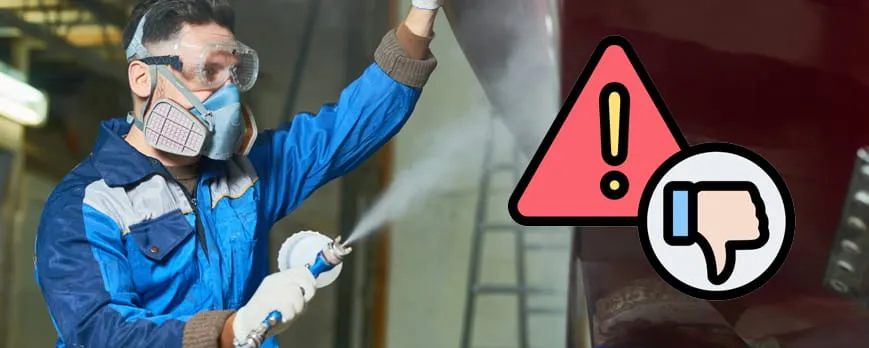
Common mistakes in the application of industrial coatings can cause premature failure, corrosion, and high maintenance costs
Introduction to Industrial Coatings
Industrial coatings are the first line of defense against corrosion, abrasion, and aggressive environments. From steel structures to pipelines, tanks, and heavy machinery, a properly applied coating can extend service life for decades. But here’s the catch: using a good product isn’t enough — it also has to be applied correctly.
Many failures we see in the field aren’t caused by the coating itself, but by common mistakes in the application of industrial coatings. And yes, some may seem like small oversights, but over time they turn into major headaches… and major expenses.
❓ Why Do Industrial Coatings Fail?
When a coating blisters, peels, or rusts prematurely, there’s almost always human error behind it. Common mistakes in the application of industrial coatings usually relate to:
Ignored environmental conditions
Poor surface preparation
–Errors in mixing or application
-Lack of quality control
The good news? All of these are preventable by following clear procedures and using a solid checklist.
⚠️ Mistake #1: Poor Surface Preparation
Without exaggeration, this is the most serious of all common mistakes in the application of industrial coatings.
If the surface isn’t clean and doesn’t have the correct profile, the coating won’t adhere properly. It’s like trying to stick tape onto dust… it just won’t last.
Improper abrasive blasting
Poorly calibrated abrasive blasting can leave:
-Very low profile: Low adhesion
-Very high profile: Uncovered peaks
-Presence of residual dust: Detachment
⚠️ Mistake #2: Surface Contamination
Grease, oil, soluble salts, or dust can ruin any job. Even if they’re invisible, they affect adhesion.
A typical issue among common mistakes in the application of industrial coatings is cleaning “by eye” without salt testing or proper solvents.
Practical solution:
-Salt testing (Bresle method)
-Cleaning with approved solvents
-Oil-free compressed air
⚠️ Mistake #3: Ignoring Ambient Humidity
Humidity has a bigger impact than many realize. If the surface temperature is close to the dew point, invisible condensation forms.
Result: blistering and corrosion under the coating film.
Among common mistakes in the application of industrial coatings, this happens frequently in coastal areas or early mornings.
Basic rule:
The surface must be at least 5°F (3°C) above the dew point.
⚠️ Mistake #4: Incorrect Temperature During Application
Every coating has an application temperature range. Too cold = poor chemical reaction. Too hot = rapid surface drying and solvent entrapment.
This leads to:
-Wrinkling
-Orange peel
-Low chemical resistance
Another classic among common mistakes in the application of industrial coatings.
⚠️ Mistake #5: Incorrect Mixing of Components
With epoxy or polyurethane coatings, wrong proportions completely change performance.
-Too little catalyst: Does not cure
-Too much catalyst: Fragility
-Incomplete mixing: Soft spots
Always use mechanical mixers and respect induction time.
⚠️ Mistake #6: Incorrect Film Thickness
Applying too little reduces protection. Applying too much causes cracking.
Measurement is key. Many common mistakes in the application of industrial coatings are discovered too late because wet and dry film thickness gauges weren’t used.
⚠️ Mistake #7: Incorrect Recoat Intervals
Each layer has a recoat window. If missed, sanding or surface profiling is required.
Ignoring this causes intercoat delamination.
⚠️ Mistake #8: Using Defective Equipment
Worn spray tips, unstable pressure, or contaminated air affect the finish.
Poorly calibrated equipment = another major issue among common mistakes in the application of industrial coatings.
⚠️ Mistake #9: Applying Over Active Rust
Painting over active corrosion is like covering a wound without cleaning it first.
Corrosion keeps advancing under the coating.
⚠️ Mistake #10: Not Respecting Cure Time
Dry to the touch is NOT the same as fully cured. This mistake causes damage when equipment is put into service too soon.
⚠️ Mistake #11: Poor Ventilation
Without ventilation, solvents get trapped. Result: bubbles and incomplete curing.
⚠️ Mistake #12: Incorrect Coating System Selection
Not all coatings are suitable for every environment. Choosing wrong is one of the most expensive common mistakes in the application of industrial coatings.
⚠️ Mistake #13: Lack of Personnel Training
Industrial coating application isn’t “just painting.” It requires technical training.
⚠️ Mistake #14: Skipping Quality Inspections
Without inspection, there’s no control. Tests like adhesion, thickness, and continuity are essential.
⚠️Mistake #15: Ignoring Manufacturer Specifications
Technical data sheets exist for a reason. Not following them is a gamble.
Practical Application Checklist
Checkpoint
-Surface has proper profile
-Free of dust, grease, and salts
-Correct temperature and humidity
-Proper mixing ratio
-Thickness measured on each coat
-Recoat intervals respected
-Fully cured before service
Frequently Asked Questions About Common Mistakes in Industrial Coating Application
1. What is the most serious mistake?
Poor surface preparation. Without good adhesion, nothing works.
2. Does humidity really matter that much?
Yes. It can cause blistering and hidden corrosion.
3. Can industrial coatings be applied without abrasive blasting?
Only for minor maintenance and with proper mechanical preparation.
4. What happens if I apply more thickness than recommended?
It may crack or fail to cure properly.
5. Why does coating peel shortly after application?
Usually due to contamination or poor adhesion.
6. Who should inspect the work?
A certified industrial coatings inspector.
Conclusion
Avoiding common mistakes in the application of industrial coatings isn’t complicated, but it does require discipline, measurement, and training. When proper procedures are followed, coatings last longer, protect better, and reduce maintenance costs.
The key is not to improvise. Use the checklist, train personnel, and respect environmental conditions. That way, your coating system will work in your favor for many years.